


Quick Answer:
The best non-toxic air fresheners are ultrasonic essential oil diffusers (our #1 pick for whole rooms), DIY air freshener sprays (cheapest option), and Grow Fragrance sprays (best store-bought). Avoid anything with “fragrance” on the label — it’s a cover for 3,000+ synthetic chemicals.
You know how a whiff of banana bread can teleport you straight to grandma’s kitchen?
Our sense of smell is unbelievably powerful! And that’s exactly why the air freshener industry is a problem.

The word “fragrance” on a label is a catch-all for 3,000+ synthetic chemicals, many of which are linked to respiratory irritation, hormonal disruption, and even cancer (EPA source, NRDC report). Plug-ins, aerosol sprays, those cute little car trees — they all use them.
The good news: there are genuinely safe alternatives that still make your home smell amazing.
Below you’ll find 5 store-bought picks we’ve vetted and 5 easy DIY options (most under $5), plus a section on which candles are actually safe.
Let’s get into it.

- Best Non-Toxic Air Fresheners To Buy
- 1. Non-Toxic Air Freshener Spray – Grow Fragrance (Best Store-Bought Spray)
- 2. Charcoal Air Purifier Bags (Best for Odour Removal)
- 3. Ultrasonic Diffuser (Our #1 Pick — Best for Whole-Room Daily Use)
- 4. Portable Car Vent Diffuser (Best for Cars and Small Spaces)
- 5. Essential Oil Burner (Best Budget Entry)
- DIY Non-Toxic Air Fresheners
- What About Scented Candles?
- Why You Should NOT Refill Plug-In Air Fresheners
- Air Fresheners FAQs
Best Non-Toxic Air Fresheners To Buy
If the homemade route is not your style, or you just can’t be bothered (I hear you!), there are still several options you can buy either online or at your local health food store.
| Option | Best For | Price | Scent Strength | Maintenance |
|---|---|---|---|---|
| Grow Fragrance Spray | Quick room refresh | $$ | Medium | None — spray and go |
| Charcoal Purifier Bags | Odor removal (no added scent) | $ | None | Replace every 2 years |
| Ultrasonic Diffuser | Whole rooms, daily use | $$ | Strong (adjustable) | Refill water + oils weekly |
| Car Vent Diffuser | Cars, small spaces | $ | Light-medium | Replace felt pads monthly |
| Essential Oil Burner | Beginners, small rooms | $ | Light | Replace tea light candle |
| Non-Toxic Candles | Ambiance + light scent | $$ | Light-medium | Trim wick, replace refills |
1. Non-Toxic Air Freshener Spray – Grow Fragrance (Best Store-Bought Spray)
Grow Fragrance is my top pick for a store-bought spray because it’s 100% plant-based, uses only essential oils and plant extracts for scent, and they’re safe to use around kids and pets.
I’ve been using these sprays exclusively in our home for over five years and haven’t looked back.

What sold me is the transparency — every ingredient is listed, nothing synthetic, nothing hidden behind the word “fragrance.” The spray goes on as a fine mist that disperses evenly instead of puddling, and the scents (Lavender, Bamboo, Citrus) smell like actual plants, not a “fresh linen” chemistry-lab guess. You can spray it on fabric, in the bathroom, or around pets without worrying.
Trade-off: coverage is lighter than conventional sprays like Febreze; by design, since there are no synthetic fixatives. For bigger rooms or stronger odours you’ll reach for it more often, or pair it with a diffuser.
Best for: quick room refresh when you want a clean, plant-derived scent without synthetic fragrance.
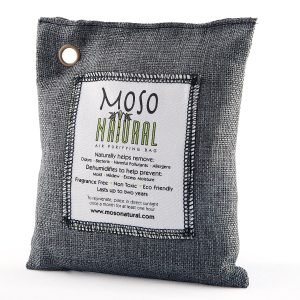
2. Charcoal Air Purifier Bags (Best for Odour Removal)
Activated bamboo charcoal bags are the best non-toxic option for odour removal without any added scent. They absorb odours, moisture, and pollutants passively and last up to two years.
There’s no oil, no mist, no battery, no electricity. You set them where smells collect — shoe closets, pet areas, fridges, cars, gym bags — and the millions of tiny pores in activated charcoal trap odor molecules. Once a month, set the bag in the sun for an hour to “reset” the charcoal and it keeps working. After about two years, cut it open and sprinkle the charcoal into your garden soil.
Trade-off: these remove odours but don’t add any scent of their own. If you want your home to smell like something (not just smell like nothing), pair them with a diffuser or spray.
Best for: passive, zero-maintenance odour control in closets, bathrooms, pet areas, and cars.
3. Ultrasonic Diffuser (Our #1 Pick — Best for Whole-Room Daily Use)
An ultrasonic essential oil diffuser is the single best non-toxic air freshener for whole-room, daily use because you control exactly what’s in the air: just water and essential oils.

You fill the reservoir with water, add 5–10 drops of your essential oil of choice, and ultrasonic vibrations turn it into a fine, cool mist. No heat means the oils’ therapeutic properties stay intact. You can switch scents daily, blend oils for mood (lavender for sleep, peppermint for focus, citrus for mornings), and run it for 30–60 minutes at a time. Most models double as soft nightlights.
Trade-off: they need weekly water refills and a quick wipe-down to prevent mineral buildup. Check pet safety too — tea tree, eucalyptus, and pine can be harmful to cats and dogs even in diffused form.
Best for: whole-room, daily use when you want full control over what you’re breathing.
4. Portable Car Vent Diffuser (Best for Cars and Small Spaces)
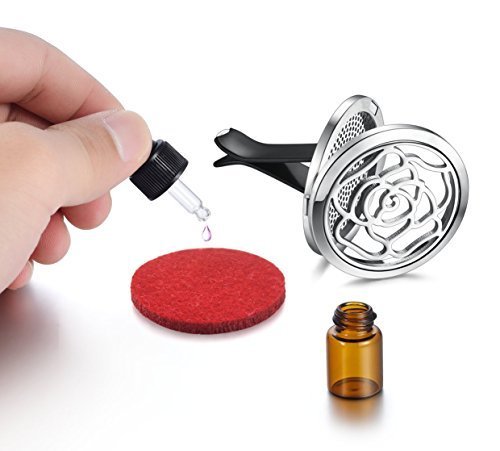
For cars and small spaces, portable car vent diffusers give you the same clean scent as an ultrasonic diffuser in a travel-friendly format.
Car vent clips hold a felt pad you dose with 2–3 drops of essential oil, then clip to a dashboard vent so airflow carries the scent throughout the vehicle.
Trade-off: coverage is small by design; don’t expect a single car vent clip to scent a whole SUV. Felt pads also need replacing every month or so.
Best for: cars, desks, travel, and any small space where a full-size diffuser is overkill.
5. Essential Oil Burner (Best Budget Entry)
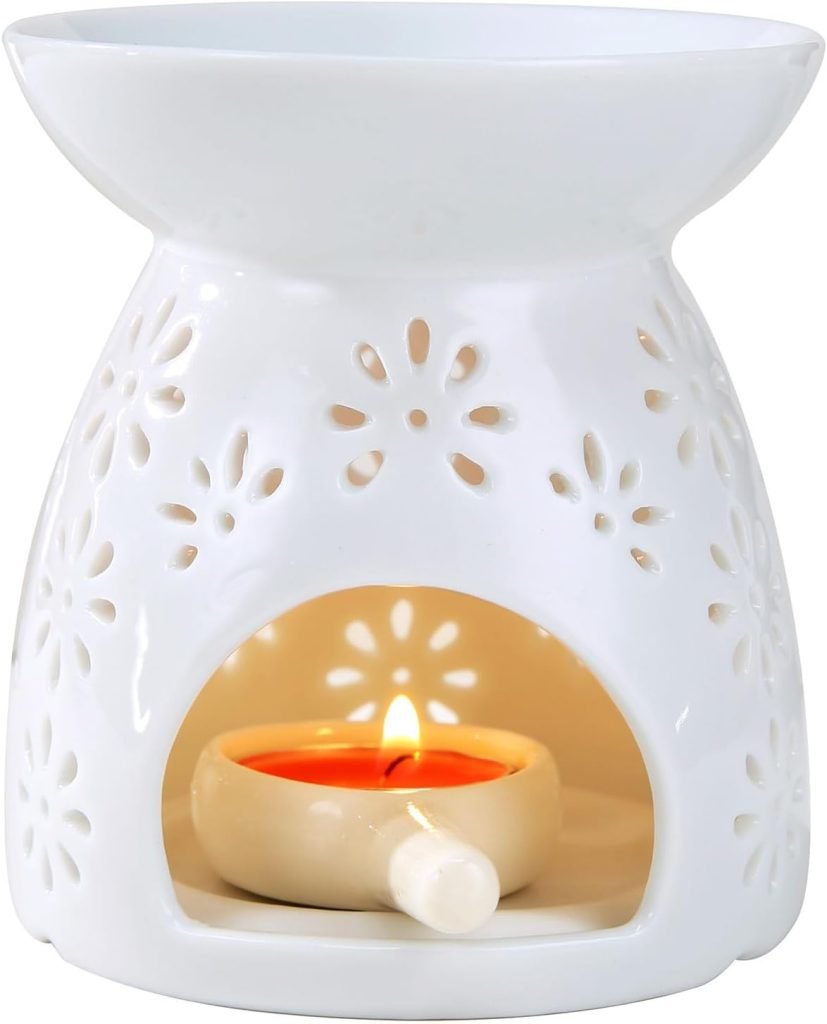
An essential oil burner is the cheapest entry point to non-toxic home scent — a small tea light warms a dish of water and essential oils for gentle, natural fragrance in bedrooms or small rooms.
The ceramic or soapstone dish sits above a tea light; the gentle heat evaporates the water and releases the essential oil aroma slowly over an hour or so. It’s beautifully low-tech: no electricity, no plastic, no app. Many are hand-thrown pieces that double as decor. Pair it with an unscented beeswax tea light to keep the whole setup clean.
Trade-off: it uses an open flame, so it’s not a set-and-forget option. Don’t leave it unattended, and don’t use it in kids’ rooms. Scent throw is also gentler than an ultrasonic diffuser.
Best for: bedrooms, reading nooks, and bath time when you want ambiance along with a light natural scent.
Looking for more air freshener options? I’ve curated a list of over 25 brands of non-toxic air fresheners in my new book, Journey to a Non-Toxic Home, including options from North America and Europe to Asia, Africa, and Australia. Check it out here >>
DIY Non-Toxic Air Fresheners
These homemade options are fairly simple and easy to put together. They use ingredients that you most likely already have on hand (or can easily find), and the best part? They don’t cost much.
1. Carpet & Room Deodorizing Powder
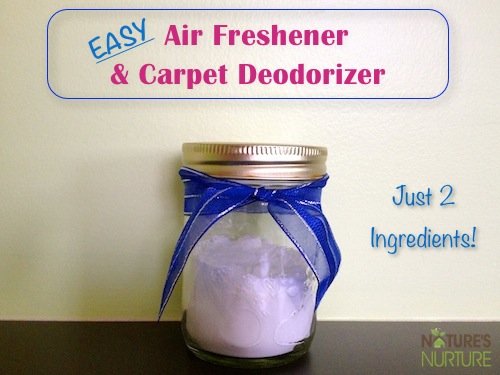
Sprinkle on carpets before vacuuming, or set a small bowl in bathrooms and closets to absorb odours. A little baking soda and essential oil is all you need. Get the recipe here >>
2. Air Freshener Spray
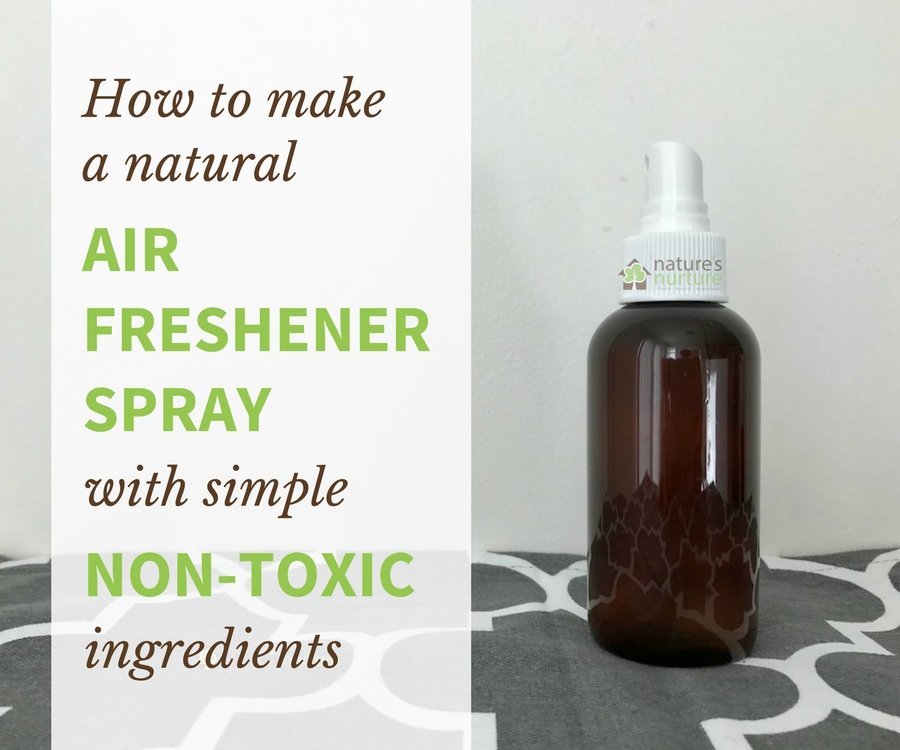
I keep one of these in every bathroom — a quick spritz handles weird smells in seconds, and it’s great before guests come over. Just water, witch hazel or alcohol, and essential oils. Get the recipe here >>
3. Reed Diffusers with Essential Oils

Most store-bought reed diffusers hide synthetic “fragrance” oils, but the homemade version uses essential oils and a secret ingredient which simplifies the process. For a stylish, low-maintenance option, you can make your own DIY essential oil reed diffusers, which last weeks and look beautiful on a counter. Best for small enclosed spaces like powder rooms and closets, not large, open rooms. Get the recipe here >>
4. Stove Top Simmer/Potpourri
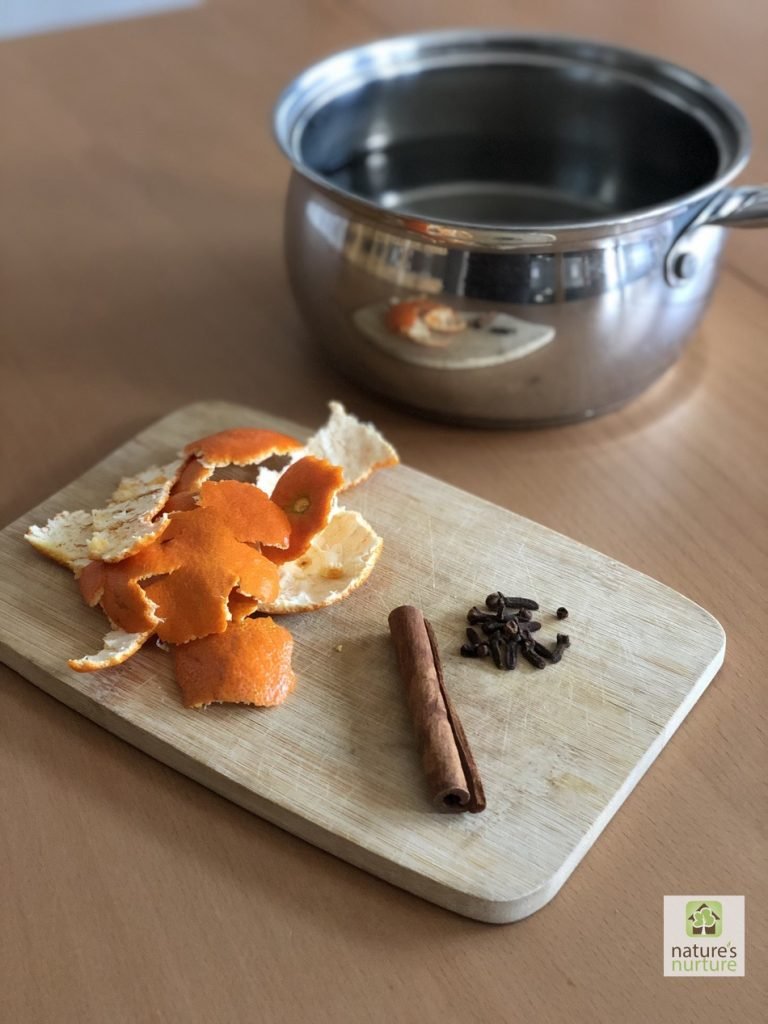
Toss spices, herbs, or fruit peels into a saucepan of water and simmer on low — instant holiday-scented kitchen with zero chemicals. Works brilliantly for cooking odours and all-day winter scent (a small slow cooker works too). Get the instructions here >>
5. Car Air Freshener

A DIY version of those pine-tree cutouts that once hung from every rear-view mirror. Just make sure to use essential oils, not perfume oils. Get the instructions here >>
What About Scented Candles?
I know how much we all love those wonderfully scented candles and waxes that seem to come in every delicious and comforting scent imaginable. But fast forward to lots of research and many years later, and we know much better now.
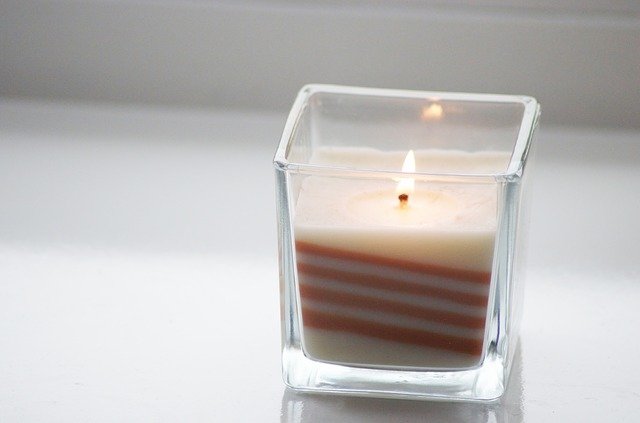
Why Most Candles are Toxic
Whether they’re scented or not, the problem comes down to the ingredients used to make them (surprise, surprise!). Most candles are made from paraffin wax, a petroleum byproduct, which releases black soot and toxic chemicals like benzene and toluene when burned. These chemicals are known carcinogens (cancer causers) and can aggravate conditions like asthma, lung and heart problems, and cause respiratory issues. (CNN report)
And if that wasn’t enough, scented candles (which apparently create more soot than unscented) are also made with artificial fragrance oils and compounds. When these oils are burned they release even more harmful particles into the air.
Safer Candle Options
The key is the wax. Skip paraffin and look for one of these three:
Beeswax is my top pick. It’s unprocessed, long-lasting, and actually helps clean your air — beeswax releases negative ions that bind to dust, mold spores, and pollutants (similar to how electric air purifiers work). The downside: they cost more upfront, but they burn much longer so you replace them less often. Unscented beeswax also has a subtle natural honey scent I love. My favourite brand (Bluecorn) is here >>
Soy wax is a great runner-up and the best vegan option. Watch the label: some companies blend soy with paraffin to cut costs, so make sure it says 100% soy wax. Most soy is also GMO, though I don’t believe that affects safety when used in candles. A brand I trust is Grow Fragrance.
Palm wax is a solid option as long as it’s made from certified sustainable palm — otherwise it contributes to deforestation.
All three burn cleaner than paraffin, produce no toxic black soot, and are safer for your family and the planet.
But what about the scent?!
If you just want the mood of a candle-lit room, an unscented beeswax or soy candle does the job beautifully. But if you want to actually scent a whole room the way your old Bath & Body Works candles did, it gets tricky. Just because a candle is made with soy or beeswax doesn’t mean the fragrance is safe too. Many companies still use synthetic fragrance oils because they’re cheaper, and some that say “made with essential oils” only use them for part of the scent with synthetics filling in the rest.
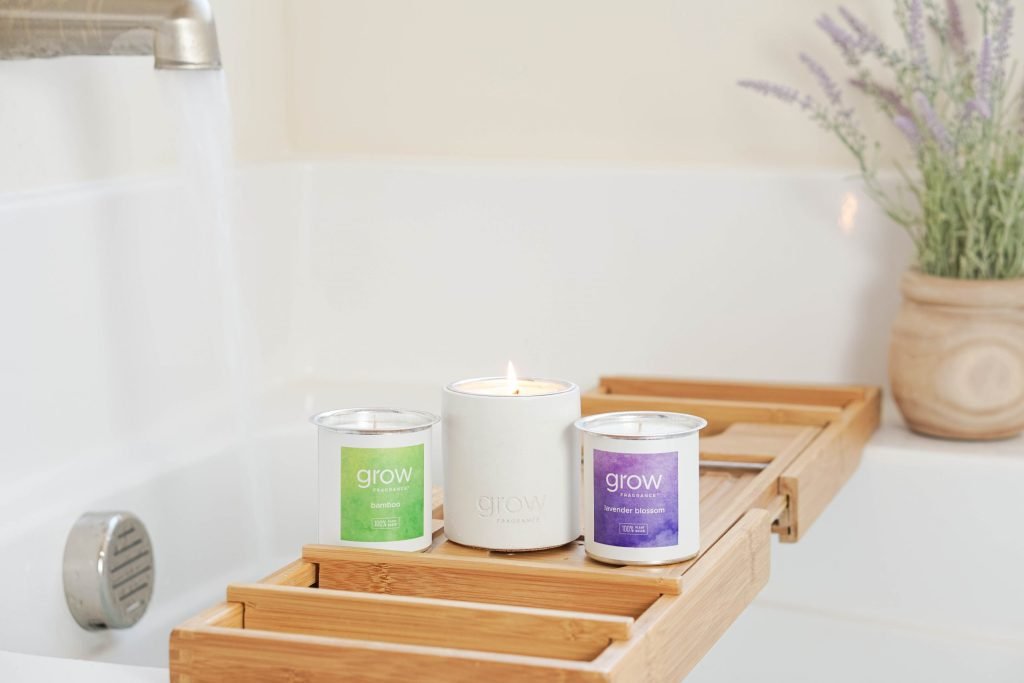
The one brand I trust is Grow Fragrance — the same company behind my favourite air freshener spray. Their candles are 100% plant-based (soy + coconut oil), scented only with essential oils and plant extracts, and come in refillable concrete vessels with recyclable aluminum refill inserts. You buy the vessel once, then pop in a new refill when it runs out. Less waste, lower cost.

Candle Safety Tips:
- Avoid super cheap or imported candles, like those found at the dollar store.
- Avoid candles with a metal wick, as they can contain lead. Unless your candles are very old, you most likely won’t come across these, but just in case.
- Make sure you’re burning your candles in a well-ventilated area, i.e.: not in a tiny room with no windows.
- If you choose to continue using regular candles made with paraffin and synthetic fragrance, use them very minimally and sparingly – like a few times a month at most.
Looking for more candle options?
I’ve curated a list of 30 brands of non-toxic candles in my new book, Journey to a Non-Toxic Home, including options from North America and Europe to Asia and Australia. Check it out here >>
Why You Should NOT Refill Plug-In Air Fresheners
I see a lot of blogs recommending that you refill old plug-in fresheners with essential oils. Please do NOT do this.
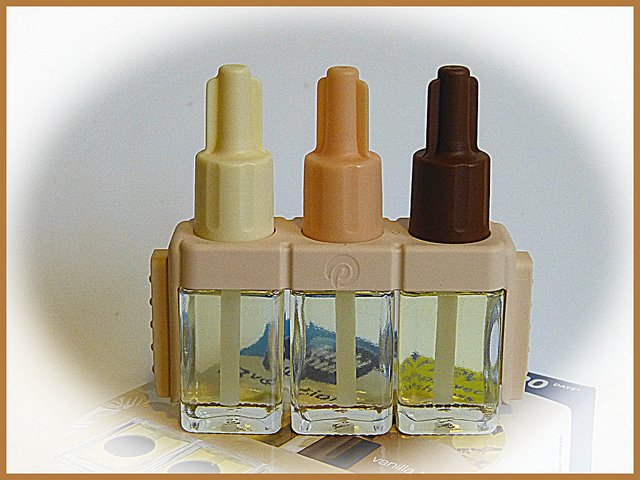
It’s not as simple as swapping in some essential oils. You’d need a carrier oil to disperse the scent — and that’s where it gets dangerous. Every oil has a flashpoint (the temperature at which it becomes flammable), and when you’re plugging something into an electrical socket, that matters a lot. If the device malfunctions or oil drips onto the socket, you’ve got a real fire risk. Some people even suggest using alcohol as a carrier, which is highly flammable.
I know it seems like a clever hack, but the risk just isn’t worth it when there are so many safer alternatives — an ultrasonic diffuser does the same job with none of the danger.
Bottom line: Don’t refill plug-ins with anything other than what they were designed for.
Air Fresheners FAQs



Hi Sarah – thank you for your easy recipe to make home made Essential Oil Reed Diffusers which I’ve made and placed in the bathrooms, bedroom and family room. However they emit very little fragrance (if any). I purchased my (natural) reeds through Aussie Candle Supplies and use 10 in each bottle but it appears that the reeds are not absorbing the mix (or fragrance). I used 99% Isopropyl Alcohol and Safflower Oil (it did say cooking oil, is that still okay?). I also used more than the suggested 25-30 drops of essential oils, but this still didn’t increase the fragrance. Do you have any suggestions as to why (a) there is very little (if any) scent and (b) oils not appearing to soak up into the reeds.
Thanks
Jenny
Hi, do you know any air freshener which would be non toxic but also pet friendly? The essential oils are harmful for pets.
Look forward to hearing from you,
Suzie
Hi Suzie, Grow Fragrance answers this question on their site. Please have a look here: https://growfragrance.zendesk.com/hc/en-us/articles/360041227952-Are-your-products-safe-to-use-around-pets-
I like your blog
I was looking for diy candle recipe which I couldn’t find
Can I send me link
You have good research MashAllah
Salam Saadia, thanks for the kind words! I actually don’t have a DIY candle recipe on the blog, but there are several out there on the internet if you want to do a quick search. 🙂
I have also tried these natural plugin Air Fresheners…Great point about the flashpoint!
My wife has COPD and has had very bad bouts of coughing,we use air sprays.I have noticed that her breathing is worse after using the spray(the sprays have been put in bin)I have checked the type we can use. Thank you
I’m glad you’re finding ways to ease her breathing, Frank!
Hello! I know this is old but I use Jolet room sprays.. they’re designed for people sensitive to regular air fresheners and are non-toxic. their webiste it http://www.joletcollection.co
Hello Frank. I am curious what type of air freshener did you find thats safe with your wifes breathing problems? Thank you!
Curious to know what you’ve gathered from pura smart diffusers (trypura.com). Guessing it’s a no go but I’m curious.
Emma, I’ve never heard of this company before, but I’m intrigued! From what I can see, it looks like they use essential oils and natural fragrance components. I’ll have to dig in a little deeper to make a final decision on it though, but it looks promising! Thanks for sharing 🙂
Hey! Did you ever look into Pura?
I did, and I still can’t get a clear answer on what exactly is in their fragrances, so I’m staying away for now.
Hi Sarah,
Your website is a fabulous effort and contains a lot of useful information. However, I work in air quality and want to point out that, unfortunately, any kind of essential oil use carries many of the same risks you’re trying to avoid with your suggestions. Chemically speaking, essential oils themselves are complex mixtures of volatile organic compounds (VOCs) biosynthesized by plants. Even pure ones have the potential to cause to harm if inhaled for a long period of time (such as through regular use of an essential oil reed or ultrasonic diffuser). Being plant-based and natural does not make them safe.
The California Air Resources Board does not recommend the use of any air freshener that contains VOCs (which is pretty much all of them) indoors, because you’re absolutely right that indoor air pollution is often worse than outdoor. I think your suggestion of heating fruits and spices in water is a great one–just bear in mind that stovetop cooking is another source of indoor air pollution (always use a vent or hood if possible). I recommend taking off the stove once hot and putting in a jar or bowl to transfer to a lower-heat source like an electric mug or candle warmer.
https://buildingevidence.forhealth.org/research-summary/volatile-organic-compounds-and-air-fresheners/
https://www.researchgate.net/publication/222527778_The_effects_of_evaporating_essential_oils_on_indoor_air_quality
I hope you find these resources useful! Spreading public awareness of the toxicity of many common household items is truly an important mission.
Sincerely,
Danielle
Thanks for sharing, Danielle
Thank you for the wonderful And informative post! Would you be able to re-post the link to your favorite beeswax candles? The link just takes me to a general amazon search page. Also, do you have a favorite essential oil brand? Plant therapy or doterra? Thank you!!
Hey Heather,
Oh no! Thanks for letting me know. The company I was linking to is Honey Candles
Also, my personal fav essential oils line is Plant Therapy.
Really helpful thank you.
My husband has recently developed a million allergies so we’re in the process of eliminating things from the house.
We’re six weeks into all natural cleaning and air freshening products. All off your website. Nobody has had food poisoning from the counters lol so this is a good thing.
The ultimate all purpose cleaner, I’m really impressed from the very first use everything looked cleaner. It’s as if bought products left a film behind where as everything is squeaky clean. I’m happy. The bathroom scrub is brilliant too. I’ve bought a diffuser for essential oil, so no more plug ins. I also adapted the air freshner, a cup of alcohol, cup of water, and essential oils. It’s lovely.
My next challenge will be home made soap, so I’ll look through your posts there too. We’re currently using aveeno and dr bronner and his skin is ok so don’t want to rock the boat.
But thank you for your blog and recipes. You’ve helped me and in turn my husband. He’s even allergic to blue and green! So finding this has been a godsend!
Warm regards
Wonderful to hear!
In your research do you have ANY recommendations for a clean laundry/fresh linen scent that is safe. I don’t like the smells of the oils and haven’t found ANY that smell even remotely close!
Oooh, that’s a tough one! No, I can’t say I’ve come across a safe scent like that.
I do!!! http://www.joletcollection.co. Totally non-toxic and hypoallergenic. It’s actually called Fresh Linen lol. Check it out!
A simple and easy scenting solution, during winter months, is to use your radiators to disperse scent. Simply dot a little essential oil, or your own perfume if you prefer, onto a handkerchief and tuck it behind the radiator. Since hot air rises, the warmth of the radiator lifts the scent and dispersed it around the room. You can even make it a part of your festive decorations, or a cute decoration for any time. Draw a picture of a gingerbread man or teddy bear (or anything similar), stopping at the bottom of the torso, onto a piece of felt or similar absorbent fabric. Make a second, matching piece and sew them together with a thin layer of cotton wool as a light stuffing. (You can add a few magnets to make this decoration extra secure; put a small one in each hand behind your stuffing and a slightly larger one at the base of the torso in front of it.) Stitch a little face, maybe add a few glass beads (glass won’t react with the heat from the radiator or with the scent you will be adding) for detail; eyes, gumdrop buttons, a necklace for Ted, whatever. Then sprinkle a few drops of your oil or perfume over your creation’s tummy and back and position it at the top of your radiator with its body at the back of the radiator and its arms over the front The magnets will help your creation stay put if knocked by excited dog tail or even more excited child. (You could always hook it over a Christmas tree branch as well, if you wanted to. A great way to add a real tree scent to a “fake” tree. Or make a load of them, with different faces and have them lined up along the top of the radiator. You could then gift one to any unexpected visitors who happen to drop by.)
In summer, attach ribbons to the front of a fan, add a drop or two of your scent of choice to the ends, then turn on the fan to make the ribbons flutter and look pretty. And conveniently waft the scent around the room too!
Such a cute idea, Lynzi. Thanks so much for sharing!
Your post is so old I’d be surprised if you get my reply…but I’ll give it a try 🙂
First thanks for the great article. I learned a lot.
I’ve recently read, put a small drop of essential oil on top of a cold lightbulb, then when lightbulb is turned on, the scent warms up and disperses through the room. Can you think of any concerns with this idea? Of course you don’t want to put a lot, you don’t want the oil to get into the spot where the bulb screws in.
Thanks
I don’t recommend using oils (or lightbulbs) in a way that’s not recommended by the manufacturer. I would personally advise against putting drops of oils on lightbulbs as there can be risk of fire. Also, essential oils are just not intended to be burned directly, so that would be concerning for me.
What a nice website, thank you very much!
Thanks for the kind words, Jeremy!
Hi Sarah,
Thank you for your article regarding homemade DIY cleaning spray. I made mine using one of your formula. Does it stay long when you spray in your bedroom? Mine did not stay that long? Like maybe an hour only. Please advise me if that’s the case only for short time scent. Again thank you.
Grace
Hey Grace, you’re very welcome! Are you talking about the air freshening spray? If so, then yeah the homemade and natural stuff will never last as long as the conventional stuff you buy from the store. Conventional products last long because of the use of phthalates, which are linked to hormonal and reproductive issues. Unfortunately, that’s the price we have to pay to stay away from those harmful chemicals – natural air fresheners just can’t compete with that. A good way to stretch it to last longer is to spray them on fabrics and carpet.
Hi Sarah,
You mentioned that indoor air can be more polluted than outdoor air, which I have read in several other places. What about when in the summer there is frequent road construction that causes a large toxic cloud from the smoldering asphalt, or your next door neighbors on both sides, whose dryer vents both point right toward your house, use the toxic fabric softener sheets? That is really scary for me to hear that the inside of my house is so toxic when I can’t open the windows for “fresh” air. We even have to wait until after 11:00 pm or later to open our windows to cool down the upstairs sauna from a hot summer day. I understand that there are air purifiers and air conditioners, but these are not always options for some people. Also, since we have stopped using chemical fragrances we notice and react to them much more, and have discovered that the air filters for our furnace and for our top-notch air purifier have some irritating sweet scent in them… Which I don’t understand how a chemical can be considered to clean the air!
Oh man, Wendy, that does sound frustrating. You’re right, that blanket statement can’t be applied across the board. I was going to mention air purifiers and such, but then you brought up the sweet scent which is so odd. I’ve never heard of this before! Thank you for sharing this with me, I definitely want to look deeper into this…
At home, we mostly use bukhoor or oud, which are mostly natural. Now I can’t say for sure that they all are, but we have family members who make their own using natural ingredients like wood chips, musk, I think even sugar and other stuff I can’t remember which are then just mixed together or sometimes cooked and then burned with a piece of charcoal…….. and it smells amazing!!!!
I love bukhoor! But you’re right, you’ve got to source truly natural ones that haven’t been mixed with questionable ingredients. One thing I tell people is to make sure you’ve got some ventilation in place to air out the smoke afterwards.
OK, more information is needed here: What is Bukhoor? What is Oud? I’ve never heard of either of these…..How do you “make” them?
Thanks!
Great article one to mention though that for pet lovers there are many essential oils they should not use as they can be toxic to our furry friends such a ylang ylang, any citrus, mints and tea tree. Cinnamon. There’s alot out there that can have detrimental effects. So be careful all
Absolutely! I’ll go ahead and add a section with some warnings and precautions. Thanks!!
Yes! EO’s and pets don’t mix a lot of the time. I actually handcraft room sprays that are totally safe around pets! http://www.joletcollection.co check it out!
This is great info, thanks! I’m looking for some kind of refill for automatic dispensers in office restrooms. Any ideas would be greatly appreciated. I need to present a healthier alternative to our director. Thank you in advance!
What do you think of the bamboo charcoal pouches? Most of them say all natural, but then when you look deeper into the information I have found the California warnings for carcinogens. Very confusing.
I’ve learned a long time ago to take those California warnings with a grain of salt. Because they’re legally bound to put that label on almost anything with even a remote connection to carcinogens, I feel like it’s way overused and causes more fear than anything. But that’s a discussion for another day lol. As long as you can see all the ingredients in those pouches, and nothing is alarming for you, I think they’re pretty safe for the most part.
Thank you so much for doing this research for the rest of us. I’m so happy I came across your article. I’m going to order some of the Grow fragrances right now!
That’s wonderful, Moon! And the pleasure is all mine. I think you will love Grow Fragrance! 🙂
I tried using commercial wax melts but the artificial and chemical stink of them almost made me ill! I think breathing that is very bad for your health. I like the convenience and versatility of the wax melting idea, so I am going to try making my own “ melts” with beeswax and high quality essential oils. All the supplies are available at craft stores, and they are easy to make.
Sounds great, Julie!
Sarah, loads of great info here. I stopped using most of my candles just because of the indoor pollution problem. Most of my household scent is nothing except my cooking aromas. I used to have a tiny pot that looked like a mini crockpot to simmer assorted spices in. It scented the air very nicely and is was easy to mix my own from herbs and spices in my cupboard. I don’t see these mini pots around any more. Maybe their are available online somewhere; I just haven’t looked. It was a great way to not have an open flame but still scent the air well.
Yes, I miss those too! You might be able to score one at a thrift store maybe? Now you’ve inspired me to go hunting for one at my thrift stores haha!
I found some at Wal-Mart. 🙂
Nice!
I found several of those tiny crock pots at Goodwill, or other thrift shops, usually for only $5 or so! I love them!
Diffuser and beeswax candles. Simmering orange and lemon peels to humidify in winter. Couple drops of essential oil inside toilet roll tube works for little bathroom.
Great ideas, Della!
I always google the company I’m buying a candle off to see how reputable they seem. A professional website with lots of manufacturing information makes me feel a lot more comfortable using them in my home.
Good call, Ashley!
This is so awesome since I have been on a journey from 2007 to date. All due to my daughter, who was 2 yrs old at the time, being diagnosed with Kawasaki disease.
Blessings of good health to you and your daughter, Rena!