


Quick Recipe (full recipe below!)
The best homemade dish soap uses Sal Suds as the base — not castile soap, which leaves a film on dishes. Mix it with kosher salt (for thickness), vinegar, and citric acid, and you’ll have a non-toxic dish soap that actually suds up, cuts grease, and rinses clean in about 10 minutes.
I’ve failed at more homemade dish soap recipes than I can count. They didn’t suds. They left a film. They were basically just oily water pretending to be soap.
The problem? Most DIY recipes use castile soap. But castile soap is a soap — it’s not designed for dishes, and mixing it with vinegar (which a lot of recipes call for) actually breaks down the soap back into oils. That’s why you end up with a curdled, greasy mess instead of clean dishes. (As you may notice in some of the older comments on this post.)
The fix: Sal Suds by Dr. Bronner’s. It’s a plant-based detergent (not a soap), which means it actually works for dishwashing — real suds, real grease-cutting, no film. It gets an “A” rating from the EWG.
Note: Sal Suds is for cleaning only, not hands/body. If you have sensitive or eczema-prone skin like me, use dish gloves.
Let’s make some homemade dish soap!
For this recipe, all you need is some distilled water, kosher salt, Sal Suds, vinegar, and citric acid.
The recipe is super easy too.
First, you’ll dissolve the salt in the hot water and set aside. Then you’ll combine the Sal Suds, vinegar, and citric acid in a separate container. Add the salt mixture to the Sal Suds mixture, and pour into your soap pump. That’s it!

So How Well Does It Work?
Well, this stuff works! It looks, acts, and feels like a real dish soap – it bubbles up nicely, cleans very well, and rinses away with no nasty film or residue. The kosher salt helps it thicken up a bit so it’s not as runny as some other recipes I’ve tried. But I’ve also read other’s experiences with not being able to get it to thicken, so your results may vary.

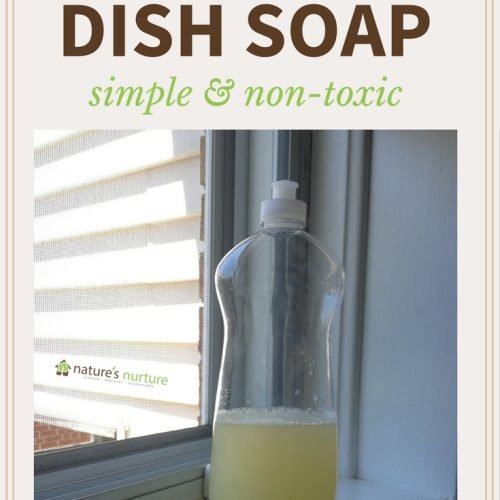
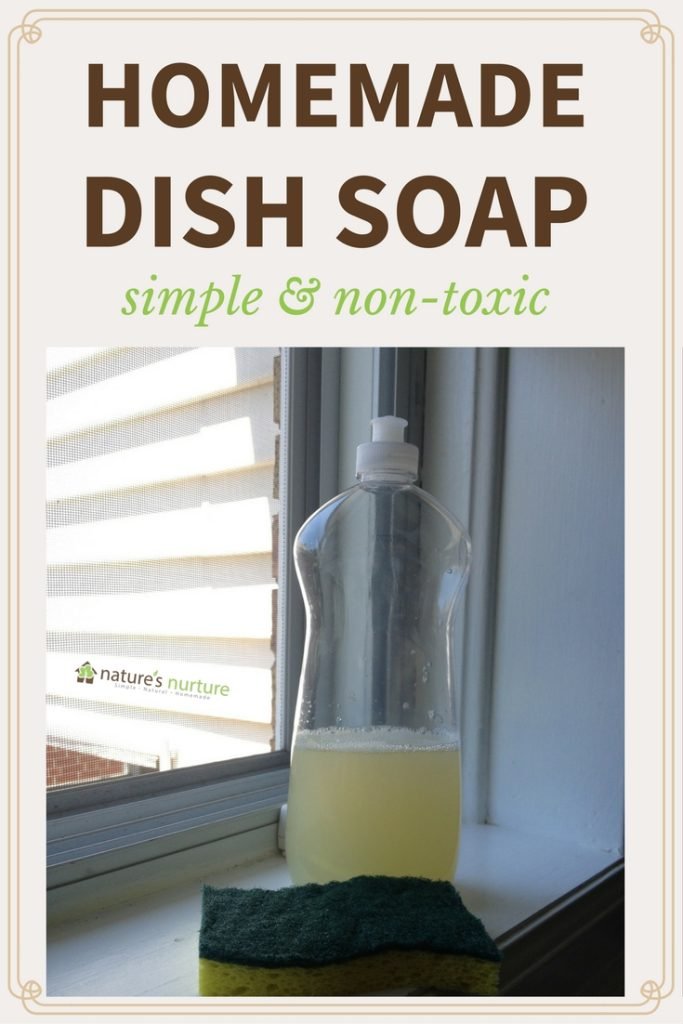
Homemade Natural Dish Soap
Equipment
Ingredients
- ½ cup distilled water
- 2 tsp kosher salt
- ½ cup Sal Suds
- ¼ cup distilled vinegar
- 1 teaspoon citric acid
Instructions
- In a small bowl, combine the hot water and kosher salt. Stir until dissolved, then set aside.
- In the squeeze bottle, add Sal Suds, vinegar, and citric acid, then swirl to combine.
- Add salt-water mixture to the squeeze bottle and gently shake until thickened.
Notes
Important Note on Dishwashing Method: I just wash my dishes with a wet sponge and soap – meaning that I don’t fill the sink with water and let the dishes soak. Instead, I squirt some soap on the wet sponge to create some suds, and wash each dish individually.
A few drops of dish soap is also what I add to my homemade floor cleaner—alongside vinegar and alcohol, it’s gentle enough for sealed wood and strong enough for tile.
How Each Ingredient Works
Homemade Dish Soap FAQs
Prefer to buy instead of DIY?
Sometimes it’s nice to skip the prep work! Here are some quality options we would use ourselves.
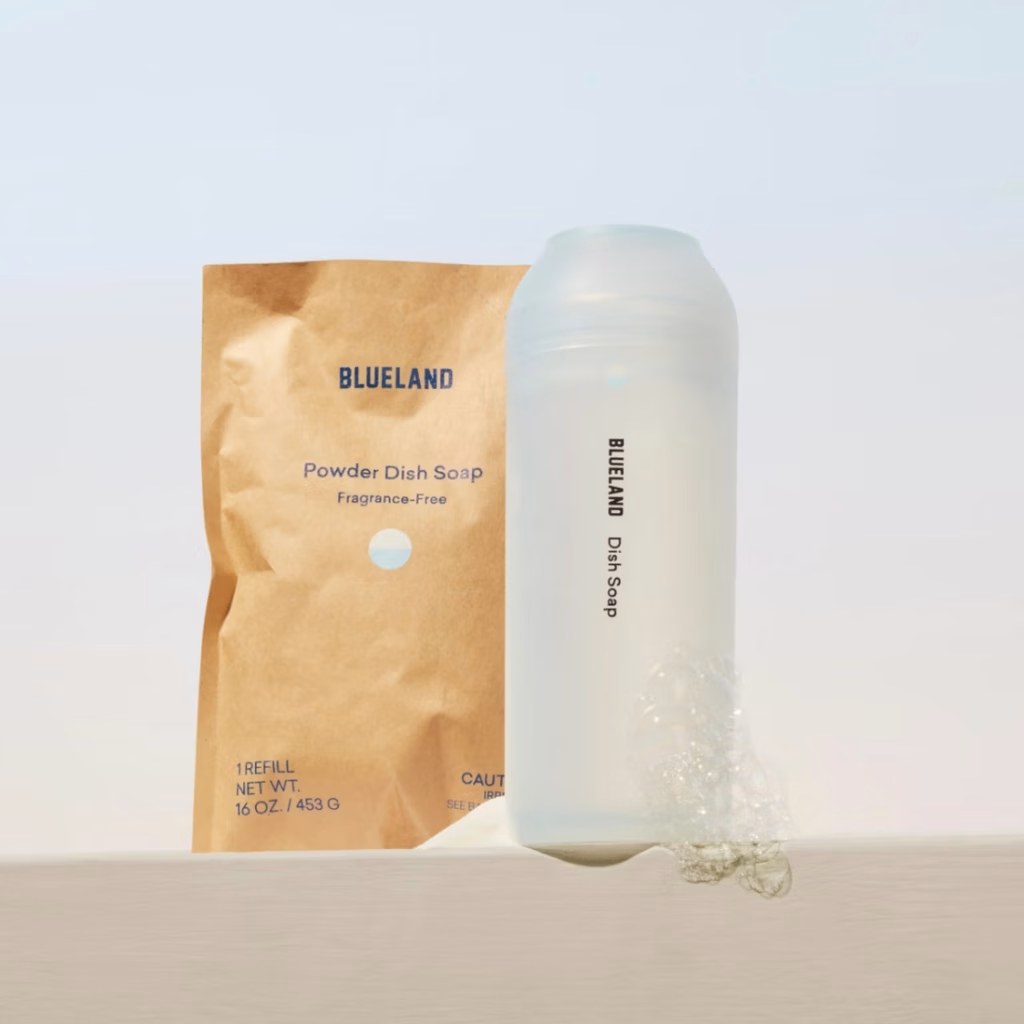
Blueland Powder Dish Soap
Blueland makes refillable, low-waste cleaning products that are safe and sustainable. They sell starter kits which include a reusable “forever” bottle along with a refill pack. When you’ve run out simply order more refills, which are shipped in 100% plastic-free materials, all the way down to their paper tape!
Their dish soap is a unique powder that you shake onto your sponge. It makes amazing suds, and the extra grittiness from the powder works well to remove stuck-on food without scratching your dishes.
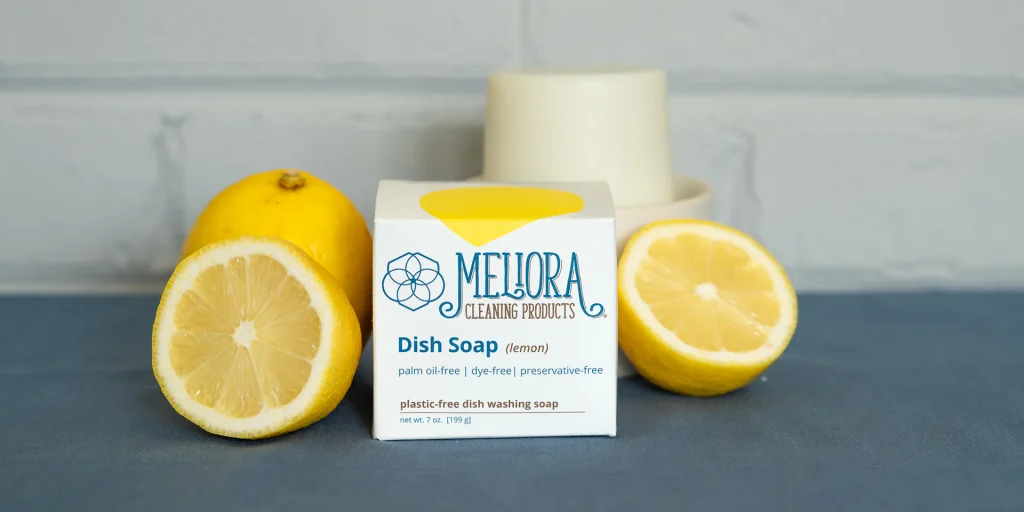
Meliora Dish Soap Bar
Meliora is another brand that I’ve come across that’s doing great things in the world of sustainability and low-waste cleaning products. Their dish soap is actually a solid bar that you place on the counter by your sink and rub a wet sponge on to create a lather.
It comes in recyclable paper packaging, but you can opt for a 100% zero-waste version which ships completely package free.



I made a batch of this yesterday – thanks for the simple, clear instructions! It cooled nicely and the consistency seemed perfect, but today I noticed it separated. Any thoughts on what I might have done wrong and/or how to fix it?
You didn’t do anything wrong. It’s a finicky recipe, as I pointed out in the notes. Just give it a good shake and it will be fine.
I’m just wondering what’s the purpose behind using the castile soap bar & the castile liquid soap together? Thank you.
It can be any bar soap (not necessarily Castile). But the bar soap keeps the cost down, and the liquid soap provides enough water content.
I love this! Do you know a recipe for a dish soap bar? I crochet dish scrubbies and wanted to put soap bars inside–you know, for when you have just that one pot that needs scrubbing and you don’t want to fill it with all soapy water, you just want to scrub it with preloaded soap scrubbies? (They make those–pre-soaped scrubbies for pots and stuff.) This way we could have a natural version instead of using so much dish soap.
Oh my, no I don’t, but that sounds very interesting!
Hi, why is the castile soap grated? Can i skip that?
Thanks
Faith
It can be any bar soap (not necessarily Castile). But the bar soap keeps the cost down, and the liquid soap provides enough water content.
What is a good substitite for liquid castille soap? Im using a coconut oil based soap.
That should work!
Hi! I am trying to make a dish detergent soap that will help with cleaning my travel coffee mugs! Most dish soaps ruin the taste of the travel coffee mugs and I wanted to try my hand at making a soap with coffee! I wanted to hear your thoughts on using this same recipe but instead of essential oils like the Tea Tree and Orange, I wanted to try a coffee essential oil. I found one on Amazon that I will copy and paste to here. Do you think by incorporating the coffee essential oil that this would help with the weird soap taste that ruins the travel mugs? I know some people don’t actually wash their mugs to keep the taste of the coffee normal but I can’t not wash mine!
https://www.amazon.com/Plant-Therapy-Essential-Undiluted-Therapeutic/dp/B0083KS3YE/ref=pd_sbs_194_1?_encoding=UTF8&pd_rd_i=B0083KS3YE&pd_rd_r=W9QZ1W5CNQ531FATF5BP&pd_rd_w=eRVz6&pd_rd_wg=rCFtn&psc=1&refRID=W9QZ1W5CNQ531FATF5BP
First of all, what a brilliant idea! I never would have thought of this haha. That being said, I would totally try it, I’m just not sure it would be strong enough to overtake the soap taste. But again, I would probably cut the recipe in half, or even less, just to try this.
Is your coffee mug plastic? A stainless steel mug shouldn’t be affected by dish soap.
I hope I don’t sound ignorant, but do the essential oils need to be food grade or can they be aromatherapy?
Not ignorant at all, Ruth! Just make sure you’re using 100% pure essential oils, not something labeled as “fragrance oils” etc.
Can this soap (because of the baking soda) be used on aluminum baking pans?
I don’t have aluminum pans, so I had to go research this baking soda issue – I learned something new! That being said, this recipe uses washing soda, which is a little different from baking soda, but after a little more research it looks like you should NOT use washing soda on your aluminum pans either.
I like to use sal suds for my dish soap since it’s excellent at grease cutting and nothing works quite as well as sal!
I used thjs recipe today for the first time and it came out really thin like soapy water. I would like it a little thicker. Do you have any suggestions? I love how it makes my hands feel. It also worked really well on my floor as i spilled a container.
Depending on several factors (water hardness, the washing soda amount, etc.) it usually tends to harden over time. If you have softer water, that might be why it’s not hardening. In that case, you can increase the washing soda amount just a bit to see if that helps.
I have always been interested in natural products and I will be trying out some of what I see here.
I live in the Caribbean and it is a bit difficult to get some of the products such as Borax, but recently I checked many places for it and finally got it at an Industrial supply store. I think that many persons are not interested in Greener Products. I will do the best I can. This site has so much stuff which make sense. Thank you.
Do the best you can with what you’ve got. Great work, Mirthlyn!
Very informative but I live in a part of world where liquid soap can’t be found. Do you think I can substitute it for something else to make my own dishwashing liquid?
Hmm, you might be able to use a bar of soap and shred it, then melt it down in some boiling water to create a liquid soap. But it would have to be heavily diluted in order for it not to become solid again once it cools down.
Is it not cutting the grease, what can I do add to it?
Thanks for helping, Catherine! 🙂